Last Updated on July 19, 2026
It’s been a while since I visited Morocco, but I still have great memories of all the delicious food and drinks from that time. Embarking on a (culinary) adventure in Morocco was a great experience. In this article, I am excited to share some of the best places to visit in Morocco for foodies.
What you’ll find in this article
Estimated reading time: 9 minutes
Morocco food: all kinds of influences
In Morocco you can find influences from Berber, Arab, Moorish, and French cultures, creating a vibrant and diverse cuisine. Iconic dishes like couscous, tagine, pastries and pastilla showcase the country’s rich culinary heritage. The use of ingredients like saffron, cumin, coriander, and preserved lemons adds depth to the dishes.
Tip: if you are not sure about arranging a trip to Morocco yourself, you can book one of the many Morocco Tours available. They are great opportunities to explore the cuisine of Morocco and offer an immersive experience, taking you through local markets, traditional farms and arranging exclusive meals.


The best places to visit in Morocco for foodies
Below I share my favorite places to visit in Morocco if you love food as much as I do:
– Fez
Fez, known as the cultural heart of Morocco, was a haven for food enthusiasts like myself. I found plenty of traditional Moroccan delights in the old medina. It was Fez where I tried for the first time in my life a pastilla, a flaky pie filled with a delightful blend of pigeon meat, almonds, and spices. I loved the powdered sugar and cinnamon on top. Furthermore, I enjoyed some other traditional dishes like Kefta and Zaalouk.
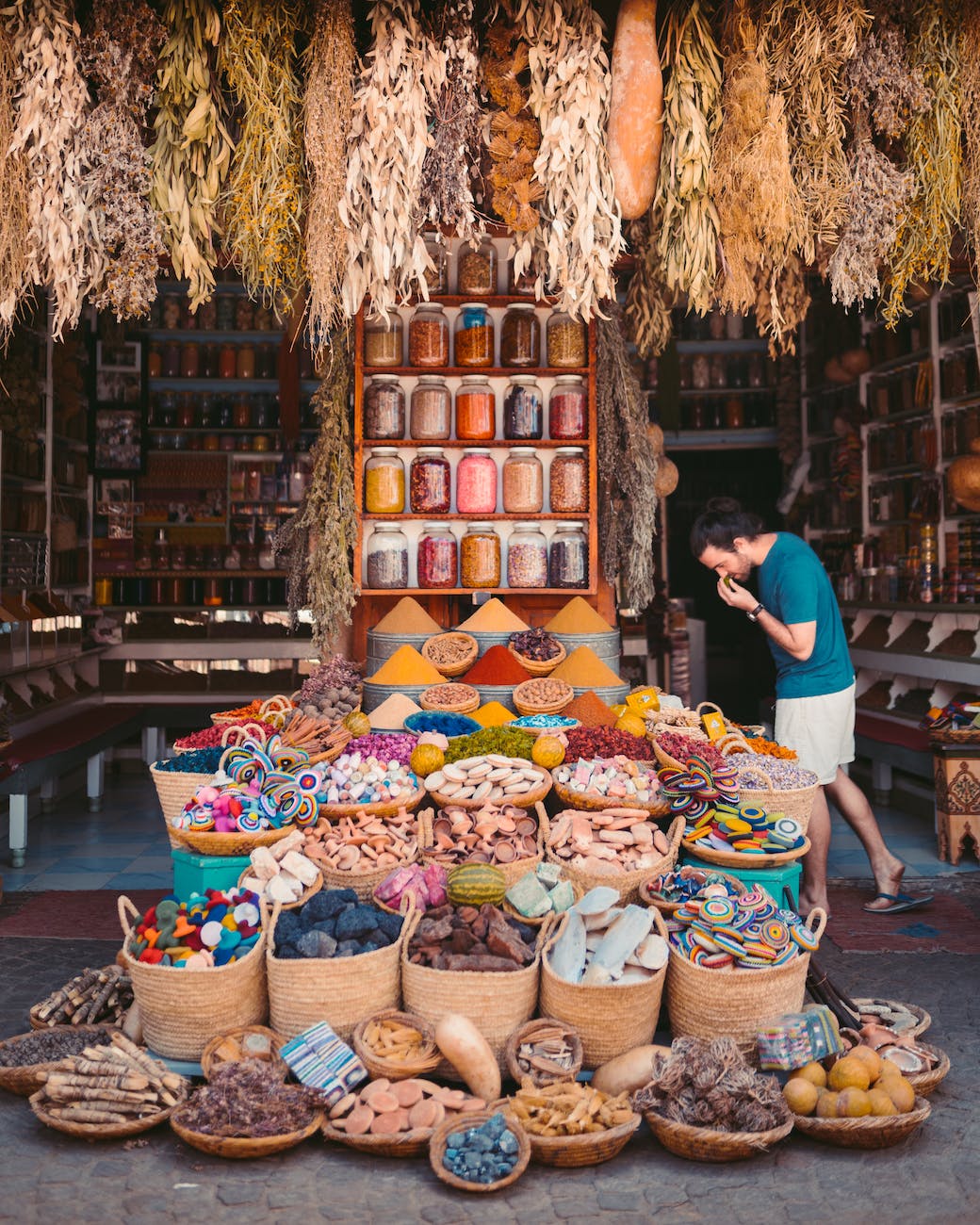
Exploring the local markets, particularly the lively Bab Bou Jeloud in Northern Fez, was a great experience. Here, you can find plenty of vendors selling spices, fruits, and local delicacies.

– Casablanca
Casablanca is a great place to visit if you love seafood. The Central Market (Marché Central) was a must-visit, where fresh fish was transformed into delicious dishes. I couldn’t resist trying some Moroccan couscous and tangine. I tried a spicy fish stew with lemon couscous and a Moroccan Shrimp Couscous, both tasted amazing. For the tangine, I chose a slow-cooked chicken stew and some Khobz, a bread that came in a round, flat shape. The bread was a great tool to sop up the juices from the tagine.
Casablanca has plenty of sightseeing opportunities. The iconic Hassan II Mosque was a must-see with its stunning architecture and seaside location.

– Chefchaouen
During my visit to Chefchaouen, nestled in the Rif Mountains, I discovered that the Blue City not only provides breathtaking views, but also a great cuisine. My culinary journey in Chefchaouen was influenced by both Spanish and Moroccan flavors. I tried the famous goat cheese (Jben). Jben is a traditional white cheese, usually enjoyed for breakfast and as a midday snack along with mint tea. I loved both the cheese and the small glasses of mint tea. I found Café Clock to be the perfect spot to unwind, drinking some traditional Moroccan mint tea while enjoying some local food and beautiful views.
Tip: if you can’t handle the amount of sugar in the mint tea, just ask for your tea la sukkar (without sugar).


– Rabat
In Rabat, the capital of Morocco, I tried delights like maakouda (potato fritters), harira (soup), different salads and a classic lamb tagine. The Harira Soup contained tomatoes, lentils, chickpeas, and various spices. It was delicious! The tender meat of the lamb tangine infused with aromatic spices, was delicious too.
Tip: did you know that Morocco is the 4th largest producer of olive oil in the world? Olive oil and olives can be found in myriad dishes and you can buy good quality olive oil in any grocery store or souk. I think it’s a great product to take home as a souvenir.

– Marrakesh
In Marrakesh I visited Jemaa el-Fnaa, a big square and market place in the city centre. During the day, there are many stalls selling fresh orange juice and spices. Entertainment can found too; snake charmers, henna tattoo artists, magicians and locals with chained Barbary apes. A glass of orange juice costsed around five to ten Dirham (€0,50-1,00) and was one of the best juices I’ve ever tasted.
In the evening, all the charmers and artists depart and the square gets filled with dozens of food stalls. It became a great place to try the traditional Moroccan cuisine. I loved trying different types of couscous and pastries at the market. I also couldn’t stop trying the Moroccan desserts like dates filled with walnuts, fekkas, date cookies, gazelle horns and sweet almond briouats.
Around the square you can find rooftop restaurants and souks (traditional indoor North African markets). Haggling is expected. Know a reasonable price for the item you want, and don’t hesitate to walk away if the deal doesn’t feel right.
Tip: if plan on traveling from Marrakesh to the Sahara, make sure to try some ‘sand bread’. This bread is cooked right in the sand.

– Essaouira
Essaouira is another great place to visit in Morocco if you love seafood. Next to the amazing seafood dishes, I tried Mechoui. Mechoui is a whole roasted lamb or sheep, slow-cooked to perfection and seasoned with a blend of spices. This was a unique experience! 😉
The town’s vibrant arts scene, with its galleries and lively atmosphere, heightened the overall experience, creating a perfect blend of culture and culinary delights.

Some other tips for visiting Morocco
Below you can find some useful tips for visiting Morocco:
- Local transportation: Morocco has a well-developed transportation network, including trains and buses. When using local transportation, especially in cities like Marrakesh, be aware of taxi scams and agree on a price before starting your journey.
- Language: While Arabic and Berber are widely spoken, many Moroccans also speak French and English, especially in tourist areas.
- Respect the culture: Morocco has a rich and diverse culture with strong Islamic traditions. Respect local customs and traditions, especially in more conservative areas. Dress modestly, particularly in religious sites, and be mindful of local customs and practices. Public displays of affection are not common in Moroccan culture. It’s important to be mindful of local norms and avoid intimate gestures in public.
- Currency: The official currency is the Moroccan dirham (MAD). Ensure you have enough local currency, as some places may not accept credit cards. ATMs are widely available in major cities.
- Weather considerations: Morocco has diverse climates, ranging from coastal areas to the Sahara Desert. Pack accordingly, taking into account the season and the specific regions you plan to visit.
- Sightseeing: There are plenty of fun things to do in Morocco. Below you can find some nice examples:
Budget tip

Traveling to a country with a different currency? Avoid ATM transaction fees and pay in local currency with a Wise Visa Card or Revolut Maestro Card. I have been using these cards for several years and have saved a lot of money as a result. I recommend bringing both bank cards with you when you travel.
Conclusion
My Moroccan food adventure was a whirlwind of flavors and cultural delights! From the markets of Fez to the seafood in Casablanca and the blue charms of Chefchaouen to the bustling square of Marrakesh, each place in Morocco has their own charmes. I tried many different dishes like couscous, tagine, pastilla and Jben. Whether sipping on an orange juice in Marrakesh, drinking a mint tea in Chefchaouen, or savoring Mechoui in Essaouira, there are plenty of places to visit in Morocco if you love food!
If you have any questions about the above mentioned information, please let me know in the comment section below. I’m happy to help you. Safe travels!
Save for later!
Pin this post for later if you’re planning to visit Morocco!