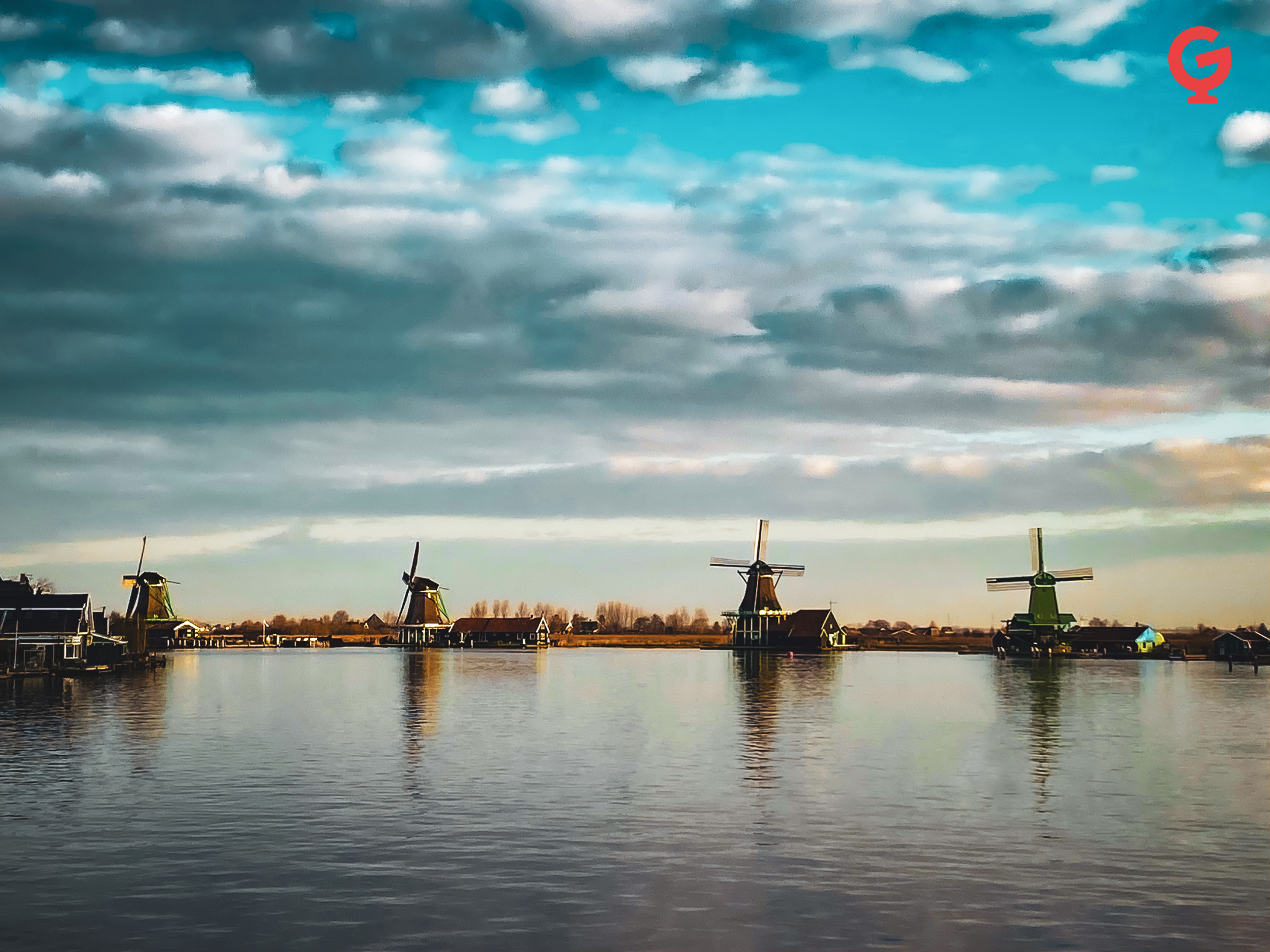
The Netherlands is known for its windmills, tulip fields, and canal cities. It’s a country made for cycling, with a nice vibe year-round. Here’re some other facts about The Netherlands:
 Capital: Amsterdam
  Currency: EURO
  Language: Dutch
  Time zone: Central European Time (CET, UTC +1)
  Power plugs: Type C & F, 230V / 50Hz
  Driving side: Right
 Useful local phrases:
Hello: Hallo
Thank you: Bedankt
I’m Sorry: Sorry
The food/drink is great: Het is lekker
Best time to visit the Netherlands
Wondering about the best time to visit the Netherlands? Whether you want to see tulip fields in full bloom, visit the beach, or explore cozy cities in winter, below you can see an overview of the different seasons in The Netherlands.

Summer
June – August
18–28°C
Rain is sporadic

Autumn
September – November
8-20°C
Frequent rain

Winter
December – February
0–7°C
Gray, wet days. Occasional snow

Spring
March – April
8–18°C
Occasional showers
So what’s the best time for visiting the Netherlands?
- Summer: best for beach days, outdoor dining and island hopping
- Autumn: best for nature walks and city trips,
- Winter: best for Christmas markets, cozy cafés and museums
- Spring: best for tulips and ideal cycling conditions
How to get there and getting around?
Airport: Amsterdam Schiphol Airport, just 15–20 minutes by train from Amsterdam. You can compare flights and find the cheapest deals via Skyscanner. If you don’t know yet when you are going to leave the country, buy an onward ticket and fake your return. This works fine.
Train / Bus options: The Dutch public transport system is fast, reliable, and easy to use. Trains connect major cities like Amsterdam, Rotterdam, Utrecht, and The Hague. For regional buses, trams, and metro, check 9292.nl or the official NS Dutch Railways website. Most tickets are digital, no printing required and you can pay with your card or smartphone. Distances are short. Most major cities are within 1 hour by train.
Car rental / driving: It’s very easy to drive to the Netherlands from neighboring countries like Germany or Belgium. Roads are well maintained and clearly signposted. I recommend renting a car if you want to explore rural areas like the Veluwe, Zeeland, or the northern. Parking, however, can be expensive and limited. I always suggest parking outside the city center, using a P+R (Park & Ride) or booking a parking spot in advance. If you’re staying overnight, check whether your accommodation offers free parking. This can save you a lot of money. Use DiscoverCars to compare car rental prices.
Cycling or walking: Walking and cycling is one of the best ways to explore cities in The Netherlands, especially centers. The Netherlands is very bike-friendly. Consider booking a free bicycle or walking tour via Freetour or GuruWalk.

Destinations
Click a destination to explore more!
Latest travel guides
FAQ about The Netherlands
Is the Netherlands safe for (female) solo travelers?
Haha, I’m Dutch, so maybe I’m biased, but yes, I would say that The Netherlands is very safe for solo travelers. Cities are well-lit, public transport is reliable, and people are friendly. I’ve never had any problems traveling alone here.
Why is the Netherlands worth visiting?
I love the Netherlands for its islands, colorful tulip fields, canals, and charming cities.
Is the Netherlands cheap to visit?
It’s not the cheapest country in Europe. Accommodation and dining can be pricey in major cities. Cycling make getting around affordable. Traveling to a country with a different currency? Avoid ATM transaction fees and pay the local currency with a Wise Visa Card or Revolut Maestro Card. I have been using these cards for several years and have saved a lot of money as a result. I recommend bringing both bank cards with you when you travel.
Is tipping expected in the Netherlands?
Tipping isn’t mandatory. I usually round up the bill if the service is good. Locals really appreciate it, but it’s definitely not required.
Do I need a visa for visiting the Netherlands?
If you’re from the EU, US, Canada, Australia, or most Western countries, you probably don’t need a visa for short stays (up to 90 days). Make sure to check the official Dutch government website. The official website to check visa regulations for the Netherlands is the Netherlands’ government portal for visas and immigration: https://www.netherlandsandyou.nl (run by the Dutch Ministry of Foreign Affairs).
This site provides up-to-date information on visa requirements, application procedures, and types of visas for different nationalities.
Do I need travel insurance for visiting the Netherlands?
Yes, I always recommend travel insurance, even though the Netherlands is very safe. Heymondo or Safetywing are among the cheapest travel insurances for travelers and cover medical emergencies, theft, delays, cancellations, lost luggage, and more. As a reader of Girlswanderlust, you’ll receive a 5% discount on your next Heymondo travel insurance.
Will my mobile phone work in the Netherlands?
Yes! Mobile coverage is excellent almost everywhere, even in small villages and countryside. The main mobile providers in the Netherlands are KPN, Vodafone Netherlands, and Odido, which operate the primary networks. Smaller providers like Simpel and Lebara Netherlands use these networks to offer cheaper plans. When I travel, I usually get a local SIM card or an eSIM. eSIMs are super easy if you don’t want to swap physical cards. Providers like Holafly, Airalo or Saily are great for eSIMs. I’ve been using eSIMs on my trips and find them convenient and cost-effective.
Can I drink tap water in the Netherlands?
Absolutely! Tap water is clean, safe, and tastes great everywhere in the Netherlands. No need to buy bottled water.
Do I need to speak the local language in the Netherlands?
Not really! Most people speak English fluently, especially in cities and tourist areas.