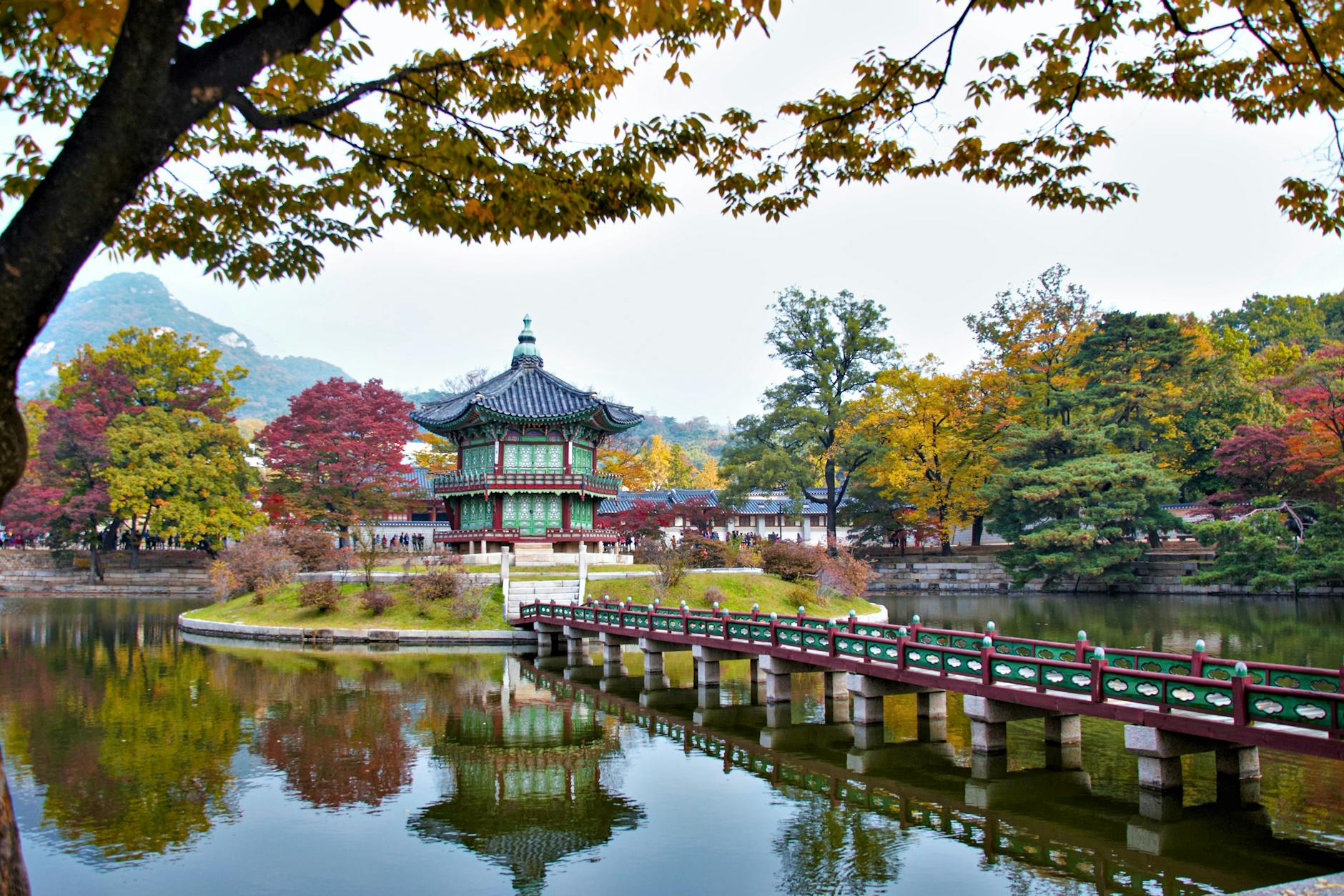
South Korea is famous for its cities, history, K-pop culture, cuisine and technology. It’s a country where traditions blend with innovation, from royal palaces to futuristic skylines. Plan your visit to South Korea with essential facts about its culture, cuisine, and the best times to explore its diverse seasons. Here are some quick facts about South Korea:
 Capital: Seoul
  Currency: South Korean Won (KRW)
  Language: Korean
  Time zone: Korea Standard Time (KST, UTC +9)
  Power plugs: Type C & F, 220V / 60Hz
  Driving side: Right
 Useful local phrases:
Hello: Annyeonghaseyo (안녕하세요)
Thank you: Gamsahamnida (감사합니다)
I’m Sorry: Mianhamnida (미안합니다)
The food/drink is great: Mashisseoyo (맛있어요)
Best time to visit South Korea
Wondering about the best time to visit South Korea? The country has four distinct seasons, each offering a unique experience. Here’s a quick overview:

Spring
March – May
10–20°C
Mild weather

Summer
June – August
25-35°C
Hot, humid and monsoon rains

Autumn
September – November
10–25°C
Cool and dry

Winter
December – February
-10 – 0°C
Cold and snowy
So what’s the best time for visiting South Korea?
- Spring: best for cherry blossoms, city walks, and mild temperatures
- Summer: best for festivals, beaches, and city life (but expect humidity ;))
- Autumn: best for hiking
- Winter: best for skiing, snow landscapes, and cozy city experiences
How to get there and getting around?
Airport: Most international travelers arrive in South Korea via Incheon International Airport (ICN), located near Seoul. It’s one of the best-connected airports in Asia. Gimpo Airport (GMP) is mainly used for domestic flights and some regional routes. Domestic flights are useful for destinations like Jeju Island. Compare flights via Skyscanner for the best deals. f you don’t know yet when you are going to leave the country, buy an onward ticket and fake your return. This works fine.
Train / Bus options: South Korea has an excellent and efficient train system. The KTX (high-speed train) connects major cities like Seoul, Busan, and Daegu quickly and comfortably. Trains are clean, punctual, and easy to navigate. Buses are also widely available and often cheaper, making them a great alternative for regional travel. Cities like Seoul and Busan have extensive subway systems that are affordable, safe, and easy to use. Get a T-money card for seamless travel across buses and subways. I recommend using apps like Korail or 12Go to book tickets easily. With just a few taps, you can book a ride ensuring a seamless and budget-friendly travel experience. Most of the time, you will receive a digital transportation ticket, so you don’t have to worry about printing.
Tuk-tuks, taxis, and motorbike taxis: Taxis are affordable compared to many Western countries. Kakao T is the most popular ride-hailing app and works similarly to Uber.
Car rental / driving: Renting a car is mainly recommended for exploring rural areas or Jeju Island. Driving in big cities like Seoul can be busy and confusing due to traffic and navigation. Use DiscoverCars to compare car rental prices.

Latest travel guides
FAQ about South Korea
Is South Korea safe for (female) solo travelers?
Yes! South Korea is considered very safe, even at night. I’ve always felt comfortable walking alone in cities. Crime rates are low, and public transport is reliable. Just stay aware of your surroundings as you would anywhere.
Why is South Korea worth visiting?
I love South Korea for its mix of culture and modern life. Think ancient palaces, K-pop culture, street food markets, and nature. It’s amazing!
Is South Korea cheap to visit?
It can be mid-range depending on your travel style. Street food, public transport, and guesthouses are affordable, while hotels and certain experiences can be pricier. Traveling to a country with a different currency? Avoid ATM transaction fees and pay in Korean Won with a Wise Visa Card or Revolut Maestro Card. I have been using these cards for several years and have saved a lot of money as a result. I recommend bringing both bank cards with you when you travel.
Is tipping expected in South Korea?
No, tipping is not customary and can even be considered unusual. Good service is already included in prices.
Do I need a visa for visiting South Korea?
Many nationalities, including EU, US, Canada, and Australia, can enter visa-free for short stays. However, you may need to apply for a K-ETA (Korea Electronic Travel Authorization). Always check official sources before traveling. The official website to check visa regulations for South Korea is the HiKorea portal: https://visa.go.kr/. It provides official information on visa types, requirements, and application procedures for all foreign nationals.
Do I need travel insurance for visiting South Korea?
Yes, I always recommend travel insurance. Heymondo or Safetywing are among the cheapest travel insurances for travelers and cover medical emergencies, theft, delays, cancellations, lost luggage, and more. As a reader of Girlswanderlust, you’ll receive a 5% discount on your next Heymondo travel insurance.
Will my mobile phone work in South Korea?
Yes! Coverage is excellent, especially in cities. The main mobile providers in South Korea are SK Telecom, KT Corporation, and LG Uplus, which operate the country’s primary networks. Smaller MVNOs exist, but these three dominate the market. I recommend getting a local SIM or eSIM. Providers like Holafly, Airalo, or Saily work well and are easy to use. I’ve been using eSIMs on my trips and find them convenient and cost-effective.
Can I drink tap water in South Korea?
Yes, tap water is generally safe to drink, but many locals still prefer filtered or bottled water.
Do I need to speak the local language in South Korea?
No, but English is less widely spoken than in some countries. Learning a few basic Korean phrases goes a long way and is appreciated by locals.