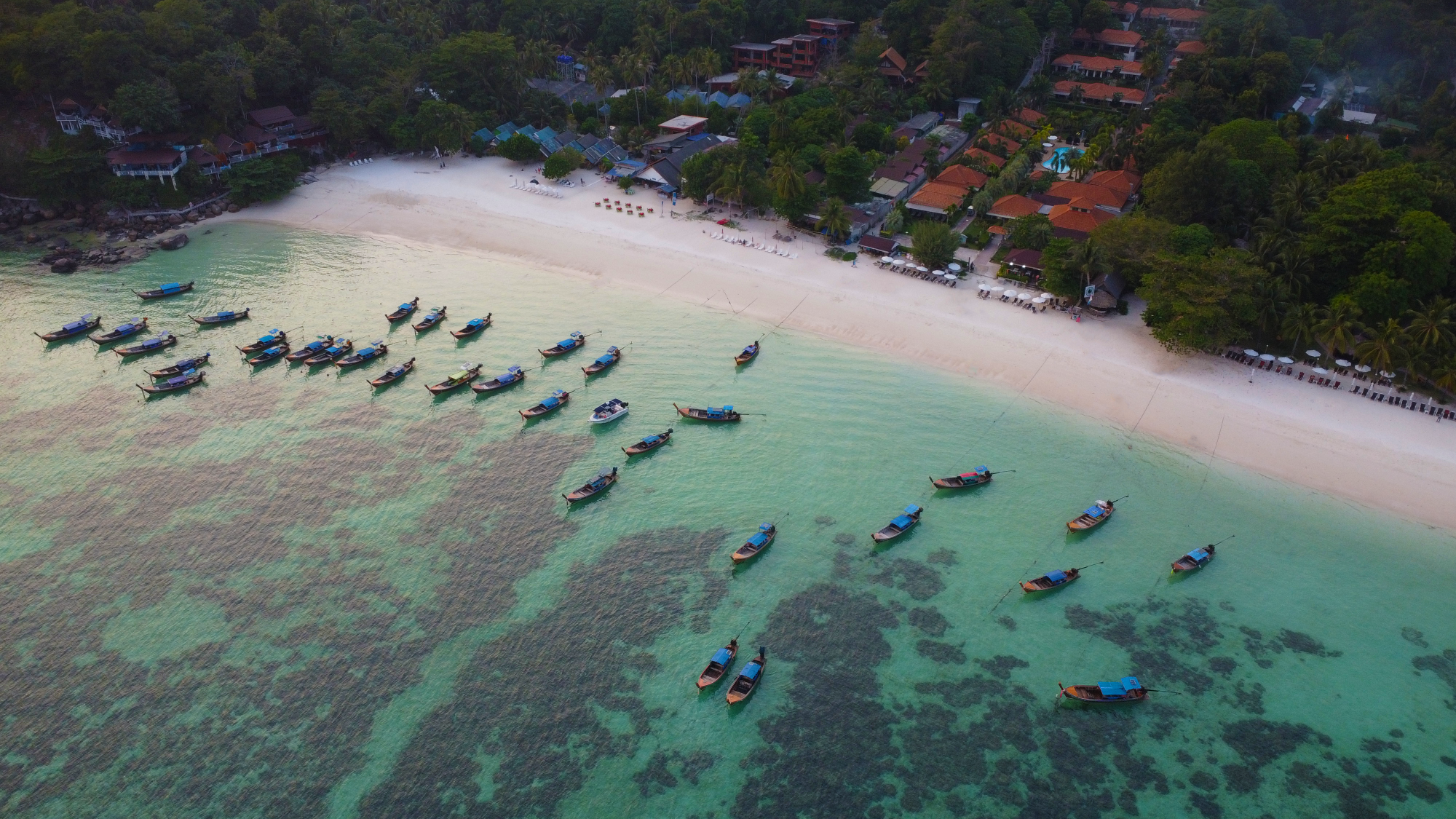
Thailand is famous for its temples, beaches, jungles, and street food scene. It’s a country full of contrasts, from amazing cities to beautiful islands. Plan your trip to Thailand with insights on its key attractions, local phrases, and tips for navigating this beautiful country. Here are some quick facts about Thailand:
 Capital: Bangkok
  Currency: Thai Bath (THB)
  Language: Thai
  Time zone: Indochina Time (ICT, UTC +7)
  Power plugs: Type A, B & C, 220V / 50Hz
  Driving side: Left
 Useful local phrases:
Hello: Female speakers ‘Sawasdeek hâ’ and male speakers ‘Sawasdee khráp’
Thank you: Female speakers ‘Khob Khun Kha’ and male speakers ‘Khob Khun Khrup’
I’m Sorry: Female speakers ‘Khǎw thôot Kha’ and male speakers ‘Khǎw thôot khráp’
The food/drink is great: Aroi mak
Best time to visit Thailand
Wondering about the best time to visit Thailand? Thailand has a tropical climate with three main seasons: hot, rainy, and cool. Here’s a quick overview:

Hot season
March – May
30–40°C
Humid, occasional heat waves

Rainy season
June – October
25-35°C
Frequent rain
Short heavy showers

Cool season
November – February
20–30°C
Dry and sunny
So what’s the best time for visiting Thailand?
- Hot season: best for island hopping, sunbathing, and tropical adventures
- Rainy season: best for fewer crowds, lush landscapes, and waterfall hikes
- Cool season: best for beaches, city tours, and outdoor activities
How to get there and getting around?
Airport: Most international travelers arrive in Thailand via Bangkok Suvarnabhumi Airport (BKK). Bangkok Don Mueang Airport (DMK) is also used by many budget airlines. Domestic flights are fast, affordable, and ideal for covering long distances. Popular routes include Bangkok → Chiang Mai, Bangkok → Phuket, and Bangkok → Krabi. Budget airlines like Thai AirAsia, Nok Air, and Thai Lion Air often have great deals. Compare flights via Skyscanner for the best deals. f you don’t know yet when you are going to leave the country, buy an onward ticket and fake your return. This works fine.
Train / Bus options: Trains connect Bangkok with northern destinations like Ayutthaya, Chiang Mai and Chiang Rai, as well as southern cities like Surat Thani and Hat Yai. Overnight sleeper trains are a comfortable way to save on accommodation. Buses are widely available, reliable, and cost-effective for shorter or regional routes. I always use 12GoAsia when traveling in Thailand. With just a few taps, you can easily book a ride ensuring a seamless and budget-friendly travel experience. Most of the time, you will receive a digital transportation ticket, so you don’t have to worry about printing.
Scooters / Motorbikes: Renting a scooter is very popular in islands and smaller towns, especially places like Chiang Mai, Chiang Rai and Pai. Rental costs are usually 150–300 THB per day. Always wear a helmet, drive carefully, and make sure you have the right international license.
Tuk-tuks, taxis, and motorbike taxis: Perfect for short trips in cities or towns. Always agree on a price before starting the ride or ensure the taxi uses a meter. Motorbike taxis are convenient but less safe, helmets are a must. Use Grab, Gojek, Bolt or Line (ride-hailing app) for rides.
Car rental / driving: Renting a car is generally recommended only for rural areas, national parks, or road trips. Driving in major cities like Bangkok, Chiang Mai, and Phuket can be challenging due to traffic congestion and local driving habits. Use DiscoverCars to compare car rental prices.

Destinations
Click a destination to explore more!
Latest travel guides
FAQ about Thailand
Is Thailand safe for (female) solo travelers?
Yes! Thailand is generally safe, especially in tourist areas. I’ve always felt safe, even in the evening. Thai people were honestly some of the kindest people I’ve met when traveling in Southeast Asia. Just stay aware, avoid isolated spots at night, and respect local customs.
Why is Thailand worth visiting?
I love Thailand for its temples, islands, jungle adventures, street food, and friendly locals. It’s a country full of contrasts and unforgettable experiences.
Is Thailand cheap to visit?
It can be very affordable, especially with local food or street food, local buses, and budget accommodations. Tourist hotspots and islands can be pricier, though. Traveling to a country with a different currency? Avoid ATM transaction fees and pay the local currency with a Wise Visa Card or Revolut Maestro Card. I have been using these cards for several years and have saved a lot of money as a result. I recommend bringing both bank cards with you when you travel.
Is tipping expected in Thailand?
Not mandatory, but rounding up or leaving small tips in restaurants or for guides is appreciated.
Do I need a visa for visiting Thailand?
Many nationalities, including EU, US, Canada, and Australia, can enter Thailand visa-free for short stays (30–90 days). Sometimes you need to arrange a Thai E-Visa. Always check the official government source before traveling. The official website to check visa regulations for Thailand is the Thai Ministry of Foreign Affairs portal: https://www.consular.go.th. It provides up-to-date information on visa types, requirements, and application procedures for all nationalities.
Do I need travel insurance for visiting Thailand?
Yes, I always recommend travel insurance, even though Thailand is very safe. Heymondo or Safetywing are among the cheapest travel insurances for travelers and cover medical emergencies, theft, delays, cancellations, lost luggage, and more. As a reader of Girlswanderlust, you’ll receive a 5% discount on your next Heymondo travel insurance.
Will my mobile phone work in Thailand?
Yes! Coverage is good in cities and popular islands. The main mobile providers in Thailand are AIS, TrueMove H, and DTAC, which operate the primary networks. Smaller brands and prepaid options exist, but these three dominate the market. When I travel, I usually get a local SIM card or an eSIM. eSIMs are super easy if you don’t want to swap physical cards. Providers like Holafly, Airalo or Saily are great for eSIMs. I’ve been using eSIMs on my trips and find them convenient and cost-effective.
Can I drink tap water in Thailand?
Not recommended. Always drink bottled water, which is cheap and widely available.
Do I need to speak the local language in Thailand?
No. English is widely understood in tourist areas, but learning basic Thai phrases is appreciated and makes interactions smoother.